The AI Model Is Not the Product

Palantir has become one of the most debated AI companies in the world.
Some people see it as one of the most important software companies of the AI era. Others argue it is overvalued because companies like OpenAI, Anthropic, and Google are building more powerful models every year. The simplified criticism: if Claude, GPT, or Gemini can reason over business data directly, why does a company need Palantir?
That question sounds reasonable, but it misses the point.
Palantir is not valuable simply because it gives companies access to AI. Companies can already access AI models directly. Palantir is valuable because it helps large, complex organizations organize their data, rules, permissions, workflows, and operational logic into a structure that AI and humans can actually use.
It is not just selling the “brain.” It is helping build the nervous system around the brain.
The same lesson runs through the rest of the software industry. Salesforce is not valuable only because it stores customer data — it defines how sales teams track accounts, leads, opportunities, follow-ups, and revenue forecasts. Notion is not useful only because it stores documents — it gives teams a shared structure for scattered notes, projects, and internal knowledge. Shopify is not just a product database — it gives merchants a structured way to operate a commerce business across inventory, fulfillment, payments, and analytics.
AI is no different.
Most people talk about AI as if the model is the whole product. They ask: Are you using GPT? Claude? Gemini? Which one is smarter? Which one is cheaper?
Those questions matter. But in most real businesses, the model is only one layer. The more important question is not which model you are using.
The better question is: does the AI understand how this business actually works?
A business is not a collection of documents, spreadsheets, and dashboards. It is a living system of people, decisions, customers, products, responsibilities, bottlenecks, and judgment calls. An AI model does not automatically understand that system. It can read text, summarize documents, answer questions, generate ideas — but unless the right layers exist around it, the model is operating on fragments.
Fragmented context leads to fragmented intelligence.
The Common Misunderstanding
A lot of AI products are built around a simple premise:
Connect some data to a model, then let users ask questions.
That is sometimes useful. But it also produces a shallow version of AI.
Imagine a small brand. The team uses one tool for sales, another for marketing, another for inventory, another for customer service, another for internal tasks. The founder has questions:
- Which products are actually driving profit?
- Which campaigns are working?
- Why are sales dropping this week?
- What tasks are blocking the next launch?
- What should the team focus on?
A basic AI chatbot might answer some of these if you upload the right file. But that is the problem — it only sees what you give it in that moment. It may see the sales spreadsheet but not the inventory issue. It may see the customer messages but not the product margin.
The AI can sound confident while missing the actual business reality.
That is why the model is not enough.
The Business Needs a Context Layer
Before AI can be useful inside a company, it needs more than data. It needs context.
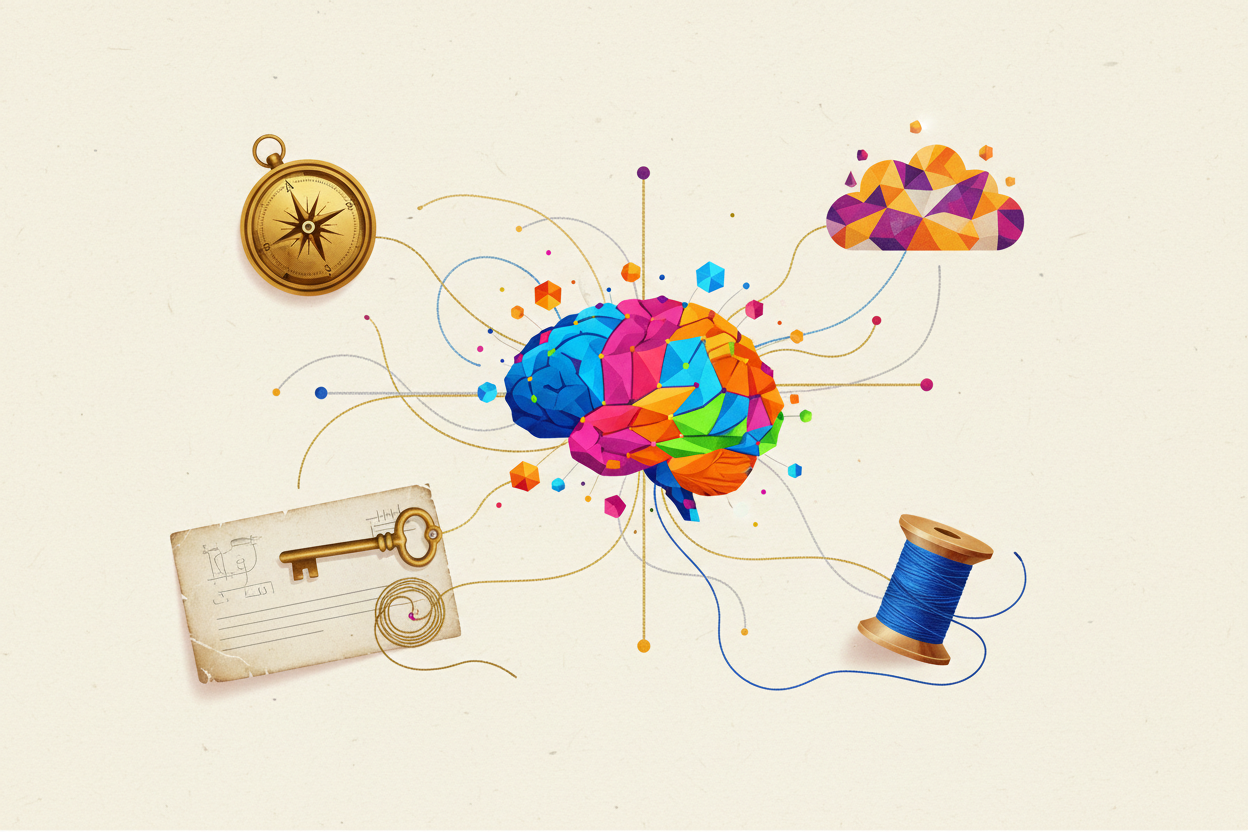
A context layer turns scattered information into meaning. It tells the system that this customer is a repeat buyer, that this campaign drove traffic but not profitable sales, that this task is blocking the next step, that this metric matters because it affects cash flow.
Without that layer, the AI sees raw information. With it, the AI starts to understand the operating reality of the business.
This is the difference between asking AI to read scattered files and giving AI a structured map of how the company works. The map is sometimes called a semantic layer, ontology, or operational context layer. The terminology matters less than the function.
The AI needs a shared business meaning layer before it can reliably help a team make decisions.
The Five Layers
Here is the clearest way to explain the architecture.
Data layer — where raw information lives: sales, inventory, messages, tasks, documents, financial records.
Context layer — where the system understands what the information means: customer, repeat buyer, blocked task, launch risk, high-margin product.
Model layer — where the AI reasons: summarizing, recommending, drafting, classifying, explaining.
Workflow layer — where insights become actions: create a task, alert the founder, assign an owner, trigger a review.
Governance layer — where trust is handled: permissions, sources, audit history, human review.
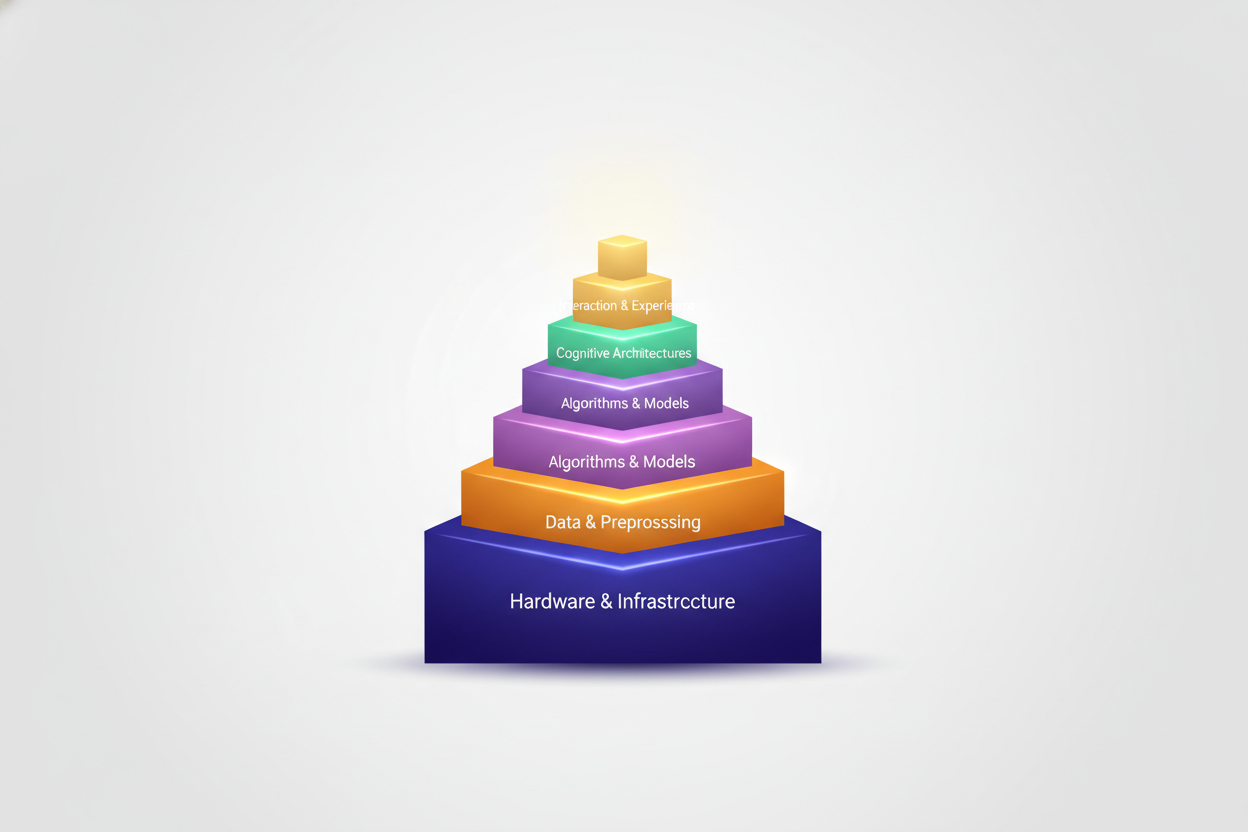
Most AI products focus almost entirely on the model layer. But in real business use, layers 2, 4, and 5 — context, workflow, and governance — are often what determine whether the product is actually useful.
The model layer is where GPT, Claude, Gemini, and other models sit. It is powerful, improving quickly, and increasingly interchangeable. Its limitation: it does not automatically know the specific meaning of your business data. If you ask it why revenue dropped last week, it needs to know which channel changed, whether there was an inventory issue, whether a promotion ended, whether pricing changed. Without structured context, it may guess confidently and be wrong.
The model can think. It does not automatically know.
The data layer is below the model. Most companies already have plenty of data — the problem is not a lack of information. The problem is that the information is scattered. Different teams own different tools. Different systems do not talk to each other. Some knowledge lives in software, some in spreadsheets, some in chat, and some only in someone’s head. This is why founders still operate by asking people directly: where are we with this? what happened? who is handling that?
The semantic layer is where raw data becomes business concepts. What counts as an active customer? What is a profitable order? What is a delayed shipment? A “customer” might mean someone who purchased once, or someone who purchased in the last 90 days, or someone with a positive lifetime value. A “successful campaign” might mean high revenue, or new customer acquisition, or sell-through of old inventory. The AI does not know these definitions unless the system provides them.
Without a semantic layer, every answer is slightly unstable. With it, meaning is defined once and reused. That is the difference between a demo and a real product. A demo can impress with a single answer. A real product gives reliable answers repeatedly.
The workflow layer connects insight to action. If the system detects that a product is selling faster than expected, it should not only say “inventory may run out soon.” It should help answer who needs to know, what task should be created, what supplier should be contacted, what campaign should be paused. This is the difference between passive AI and operational AI.
The governance layer is easy to ignore in early products. But governance — permissions, source tracking, traceability, human oversight — is what makes a system safe to act on. A founder does not only need an answer. The founder needs to know whether the answer is grounded, current, and trustworthy enough to make a real decision from.
Why the Model Will Become Less Defensible
AI models are becoming more interchangeable. Today one model may be better than another for certain tasks. Over time, that gap narrows.

A product that depends only on having a strong model is vulnerable. If the model is the whole product, the product can be copied when another company uses the same or better model.
But if the product owns the company-specific context layer, workflow layer, and governance layer, the model becomes a replaceable component. Today the system might use OpenAI. Tomorrow, Claude. Later, an open-source model or a cheaper specialized one. That flexibility is a strength.
The value is not in loyalty to one model provider. The value is in building the system that knows how to use the right model, on the right context, for the right business action.
We should not build as if the model is the moat. We should build as if the business context layer is the moat.
Why Small Teams Need This Too
This architecture is not only for large enterprises.
Large companies have more complex data and stricter compliance requirements. But small teams have a different version of the same problem. A 10-person company still has sales in one tool, customer service in another, marketing in another, tasks in another, files in Google Drive, and founder knowledge stored only in memory. The pain is not technical complexity. The pain is operational fragmentation.
For small teams, the opportunity is a lightweight version of the same idea: a shared business context layer that keeps everyone aligned and makes AI genuinely useful in the actual workflow.
AI is more valuable when it operates on a governed understanding of the business instead of disconnected fragments.
What This Means for the Product You Build
The layer distinction matters for anyone designing an AI product right now. The temptation is to ship an AI chatbot for company data and call it done. That category is easy to copy, hard to defend, and rarely useful enough for real operations.
A chatbot answers questions. The product worth building should help a business understand itself.
For a founder-led business, the problem is not lack of AI access. They can already use ChatGPT, Claude, Gemini, Notion AI. The real problem is that the company’s work is scattered. The founder has no single reliable view of what is happening. Important context lives across messages, files, dashboards, tasks, and people. AI tools stay generic instead of becoming company-specific.
What that pattern points to is a different shape of product: the shared layer where business context, workflows, and decisions become visible and usable. The AI then becomes more than a chatbot — it becomes an interface to the company’s operating system.
If you take this seriously, the product should not try to answer every possible question. It should focus on helping a team define and maintain the core operating context of the business: key objects (customers, products, campaigns, tasks), ownership, status, metrics, workflows, sources, and actions.
That gives the AI a real foundation. Instead of asking the model to guess from scattered context, you give it a structured operating map. That makes the AI more reliable, more useful, and easier to trust.
The Main Takeaway
The future of AI products will not be decided only by who has the best model.
For real businesses, the more important question is whether the system understands the company’s actual operating reality. That requires all five layers: data, context, model, workflow, governance.
Building only on the model layer produces a thin wrapper. Building the context and workflow layers around the model produces something much more valuable.
The opportunity is to help small teams turn scattered work into structured business context, then use AI to make that context understandable, actionable, and trustworthy.
That is where AI becomes part of how the business actually runs.
Get the next one in your inbox.
A quiet dispatch on the writing, the builds, and the patterns that keep showing up past the chat window.