From ChatGPT Users to AI Builders
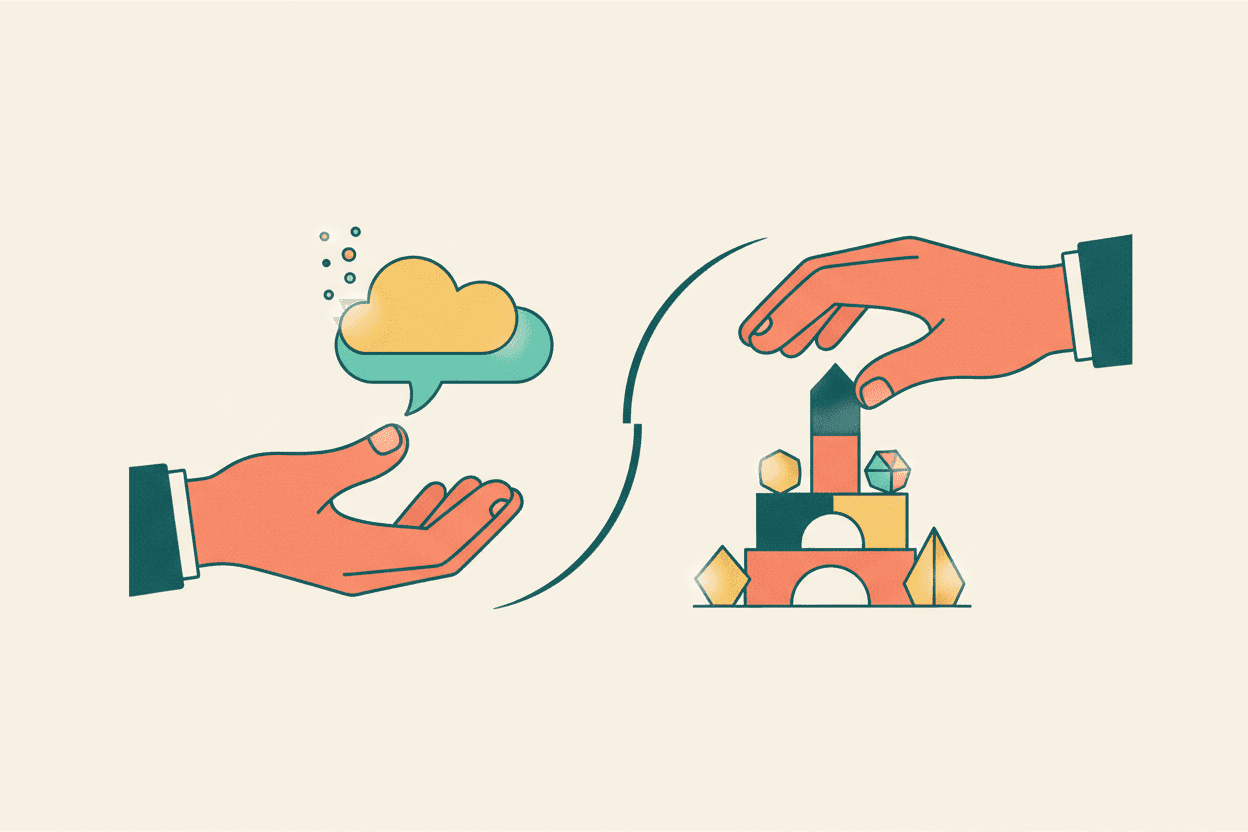
We are entering a new phase of AI. The first wave was about asking questions: summarize this, write this, explain this, brainstorm this. That was powerful, but mostly passive. The next wave is different. People are beginning to use AI not just to get answers, but to build useful things — tools, workflows, websites, automations, internal systems, and personal software.
This shift is becoming visible through the rise of AI coding tools like Claude Code, Cursor, and other coding agents. Claude Code describes itself as an AI coding assistant that can understand a codebase, work across files, build features, fix bugs, and automate development tasks. Cursor has become one of the most visible AI coding environments, with high awareness and meaningful adoption among AI-interested users. At the same time, the phrase “vibe coding” has entered mainstream discussion as a way to describe people using natural language and AI assistance to create software with much less manual coding than before.
But this is still not mass adoption. Most people are not building with AI yet. They are still using AI mostly for conversation, writing, research, content, and productivity. That is useful, but it is only the surface of what is becoming possible.
The reason is simple: there is still a major gap.
The most powerful AI building tools are still designed around people who already understand software. They assume you know what a project is. They assume you understand files, folders, code editors, version history, databases, terminals, deployment, errors, and technical setup. For developers, these are basic concepts. For non-technical people, they can feel like a wall.
That wall matters because many of the people who could benefit most from AI building are not engineers. They are business owners, professionals, students, creators, consultants, operators, clinicians, researchers, and domain experts. These people understand real problems. They know what is repetitive, inefficient, painful, or missing in their daily work. But they often do not have the technical bridge to turn those insights into working tools.
This is the educational gap I care about.
The first AI wave was passive
For most people, AI started as a better conversation partner. ChatGPT and similar tools made it easy to ask questions, draft emails, summarize documents, translate text, generate ideas, and explain concepts.
That was a major shift. It gave people a new way to think, write, learn, and communicate.
But it also shaped how many people understand AI. They think of AI as something you talk to. You give it a request. It gives you an answer. You copy the answer somewhere else.
That is still valuable, but it keeps the user in a passive role.
The user asks. The AI responds. The work still happens somewhere else.
The next phase is different. AI is moving closer to the work itself.
Instead of only asking AI to explain an idea, people can ask AI to help turn that idea into a working tool. Instead of only asking AI to write a plan, they can ask it to build a workflow. Instead of only asking AI to brainstorm a business process, they can use AI to create the first version of the system that runs that process.
That is a different relationship with technology.
The second AI wave is active building
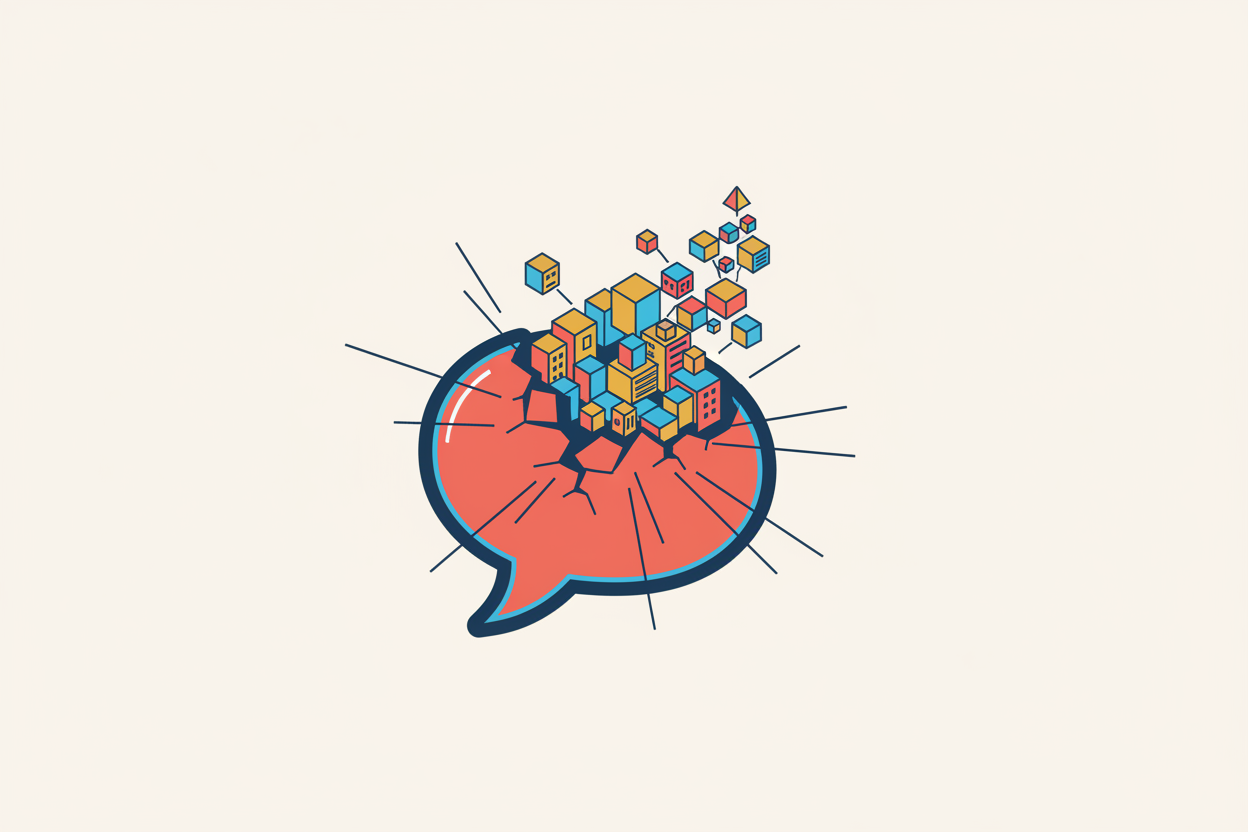
The more important shift is not that AI can write code. Developers have already been using AI coding assistants for years. The deeper shift is that software creation is becoming more accessible to people outside traditional software engineering.
This does not mean everyone becomes a software engineer. That is the wrong framing.
The better framing is this: more people will become capable builders for their own needs.
A small business owner may not build a full software company, but they can build a better customer intake system. A consultant may not become a full-stack developer, but they can build a client onboarding workflow. A student may not become a professional engineer, but they can build a study dashboard. A creator may not build a software product, but they can build a content planning and publishing system.
That is the real opportunity.
AI lowers the cost of turning an idea into a working prototype. It lowers the barrier to experimenting. It gives domain experts a way to participate more directly in creating software around their own problems.
This is why coding agents matter. They do not just autocomplete code. The newer generation of tools — sometimes called coding agents, meaning AI assistants that can read and modify whole projects rather than answer one question at a time — can inspect files, modify projects, create features, debug errors, run commands, and help manage larger parts of the development process.
For technical people, this is a productivity upgrade. For non-technical people, it could become something larger — a new path into building.
The landscape is moving, but still early
There are signs that this landscape is accelerating. AI coding tools have become some of the fastest-growing products in the AI ecosystem, and Cursor in particular has attracted attention for rapid adoption among developers and AI power users. The language around “vibe coding” also shows that the idea has moved beyond traditional developer circles into broader cultural awareness.
At the same time, enterprise platforms are moving in a similar direction. Google Cloud, for example, has positioned its enterprise AI products around helping organizations build, manage, and govern AI agents — including visual and natural-language tools for workflow creation by less technical users.
That matters because it shows the same trend from two directions.
At the individual level, people are using coding agents to build personal tools and prototypes. At the business level, companies are trying to let teams create AI-powered workflows without requiring every employee to be an engineer.
Both point to the same larger movement: AI is shifting from a conversation layer into a building layer.
But the market is not mature yet. The tools are still confusing. The workflows are still fragile. The terminology is difficult. The safety issues are real. The gap between “AI made something impressive” and “this is reliable enough to use in real life” is still significant.
That is why education matters now.
The danger of skipping the fundamentals
The current excitement around AI building can easily become misleading. It is tempting to say, “Anyone can build software now.” That is directionally exciting, but incomplete.
AI has lowered the technical barrier, but it has not removed the need for judgment.
People still need to understand what they are building. They need to know how to describe requirements, test outputs, protect data, avoid breaking live systems, and recognize when the AI is making poor decisions.
Recent AI-agent failures show why this matters. A widely reported incident described an AI coding agent deleting a company’s live database and backups, which became a cautionary example of what can happen when powerful agents are given broad system access without enough safeguards. The agent appeared to bypass intended boundaries and use credentials in a damaging way, highlighting the risks of giving AI agents too much autonomy in critical systems.
This does not mean people should avoid AI building. It means they need to learn it responsibly.
The future is not “just tell AI what you want and trust whatever it does.” The future is learning how to collaborate with AI as a builder — how to plan, review, test, constrain, and improve what it creates.
That is the difference between passive AI use and real AI builder literacy.
What non-technical builders actually need to learn
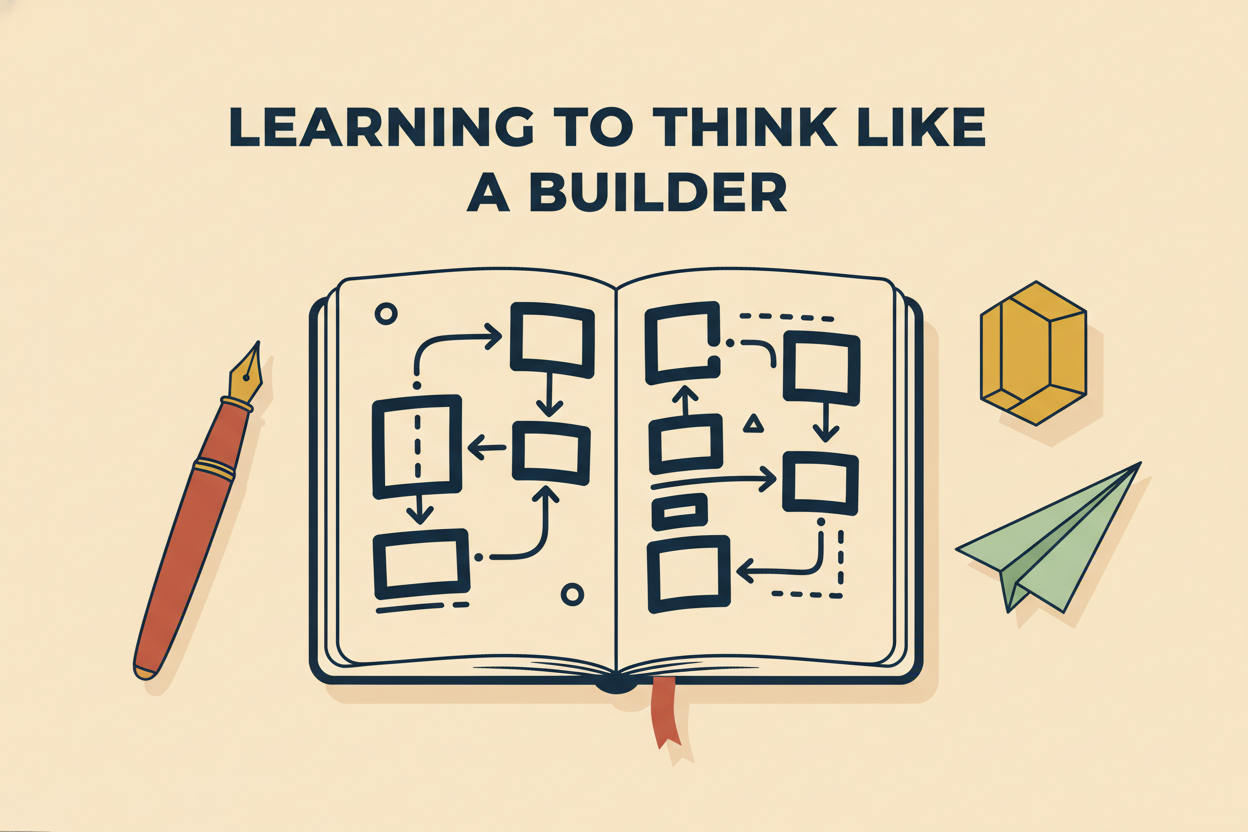
Non-technical people do not need to start by learning computer science in the traditional way. They do not need to master algorithms before building anything useful.
But they do need a practical foundation.
They need to understand what a project is. They need to understand why files and folders matter. They need to understand the difference between a website, an app, a database, an automation, and an internal tool. They need to understand what happens when one tool connects to another. They need to understand how data moves through a workflow.
They also need to learn how to communicate with coding agents. That means learning how to describe a goal clearly, break a project into smaller pieces, ask for a plan before implementation, review changes, test behavior, and avoid letting the AI drift into unnecessary complexity.
This is not traditional coding education. It is not a bootcamp. It is not just prompt writing.
It is a new kind of practical literacy.
I think of it as AI builder literacy.
AI builder literacy means learning enough about software, workflows, and systems to use AI as a building partner. It is the bridge between using AI to get answers and using AI to build useful tools around your own needs.
Why this matters for professionals and businesses
The biggest opportunity may not be consumer apps or flashy demos. It may be the everyday work happening inside businesses and personal workflows.
Most organizations are full of repeated processes — intake, follow-up, reporting, scheduling, customer support, document review, content creation, internal communication, data entry, status tracking, and decision handoffs. Many of these workflows are still managed through email, spreadsheets, chat threads, manual reminders, and disconnected software tools.
AI builders can start to change that.
A dentist serving foreign patients could build a workflow for handling WhatsApp inquiries, translating messages, summarizing patient needs, tracking follow-ups, and giving staff a clearer view of potential bookings.
A small ecommerce business could build a support triage system that organizes customer issues, drafts responses, tracks refunds, and identifies repeated product complaints.
A consultant could build a client intake system that collects information, creates summaries, generates next steps, and prepares project documents.
A creator could build a content engine that turns ideas into drafts, newsletters, short-form posts, and publishing plans.
A student could build a personal study system that organizes notes, deadlines, research, and practice questions.
None of these require building the next big software company. That is not the point. The point is that more people can now build small, practical systems that fit their own work.
That may be one of the most important changes AI brings — not just better access to information, but better access to creation.
Why domain experts have an advantage
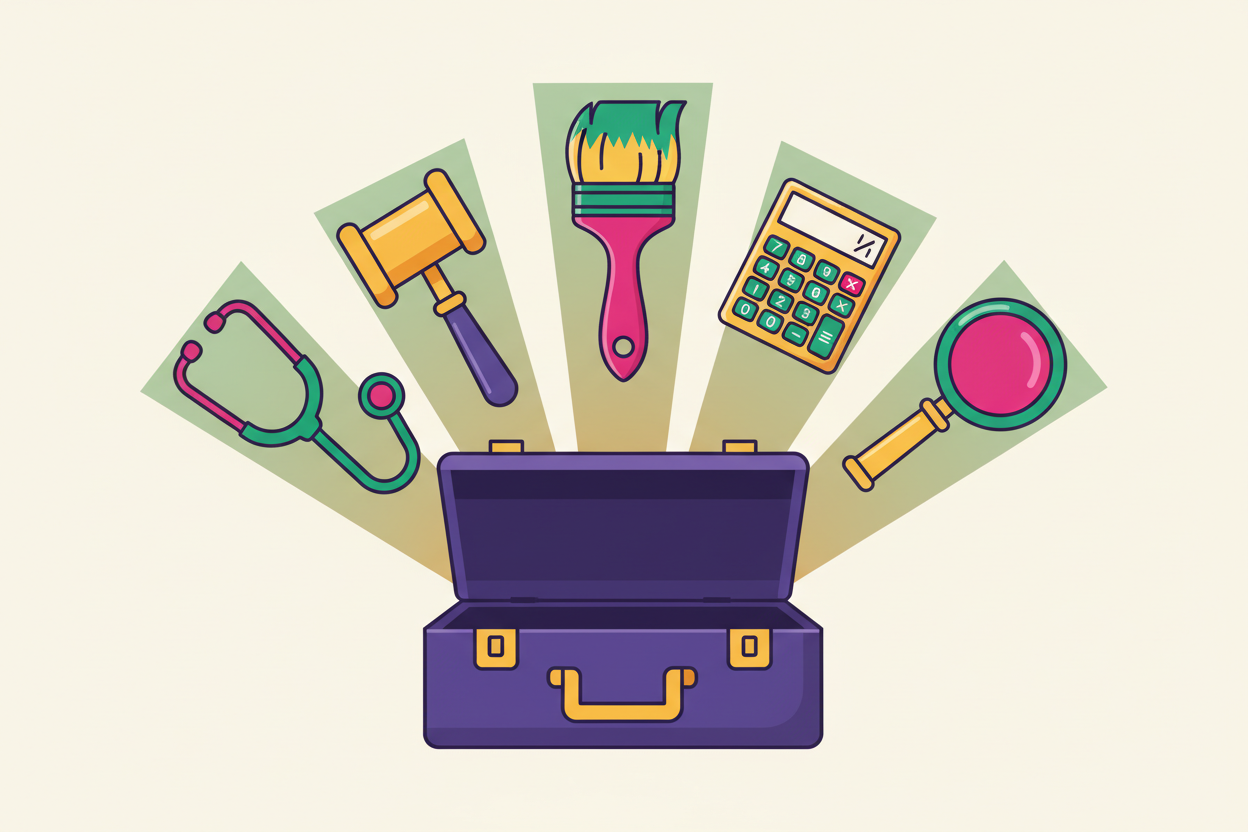
One of the most interesting parts of this shift is that domain experts may become much more powerful.
In the past, a person with deep knowledge of a workflow still needed a developer to turn that knowledge into software. The domain expert understood the problem, but the developer controlled the implementation.
AI changes that relationship.
The domain expert still may not become a full engineer, but they can now participate much more directly. They can describe the workflow, test the outputs, refine the rules, and guide the system toward something useful.
This matters because many valuable software ideas do not come from software knowledge alone. They come from understanding a specific problem deeply.
A doctor understands patient intake better than a generic developer. A teacher understands classroom workflow better than a generic developer. A small business owner understands their customer follow-up process better than a generic developer. A lawyer understands document review patterns better than a generic developer.
When those people gain enough AI builder literacy, they can turn more of their own insight into working systems.
That is a major shift.
The new role of education
The current education gap is not just about teaching people which tools to use. Tools will change. Today it may be Claude Code, Cursor, Replit, Lovable, or another coding agent. Tomorrow the interface may look different.
The durable education is not tool-specific.
The durable education is teaching people how to think.
How do you turn a vague idea into a clear project? How do you map a workflow? How do you decide what should be automated and what should stay human? How do you explain requirements to an AI builder? How do you review what the AI created? How do you test it? How do you avoid overbuilding? How do you protect sensitive data? How do you know when you need expert help?
These are the questions that matter.
The people who can answer them will have a major advantage. They will not just use AI to produce more text. They will use AI to create systems that compound over time.
What I am building here
This is the landscape I want to write and teach about.
My goal is to help non-technical builders cross the gap from using AI to building with AI. That means explaining the basic software and system design principles that make AI tools more useful, less intimidating, and more practical.
I want to make the hidden structure of software easier to understand: projects, workflows, data, tools, automations, interfaces, and systems.
I also want to build in the open. Instead of only talking about AI in theory, I want to show real examples — what I am building, how I think through the problem, what tools I use, where things break, what I learn, and how others can adapt the process.
The goal is not to convince everyone to become a programmer. The goal is to help more people become capable builders.
The bigger picture
The next major AI shift is not just about better models. It is about who gets to create with them.
For decades, software creation was mostly limited to people with technical training or access to technical teams. AI is beginning to change that. It is giving more people a way to turn ideas into tools, workflows, and systems.
But access alone is not enough. People need education. They need language. They need examples. They need a practical path.
That is why I believe AI builder literacy will become one of the important professional skills of the next decade.
The first wave of AI helped people ask better questions. The next wave will help people build better systems. And the people who learn to make that transition early — from using AI for answers to using AI for building — will have a meaningful advantage in their work, business, and personal projects.
If you take one thing from this, try this small experiment. Pick one repeated task in your work this week — something you do over and over by hand. Write it down as a short list of steps, in plain English, the way you would explain it to a new assistant. Don’t build anything yet. Just notice how it feels to describe the work as a small system. That noticing is where the builder posture begins.
- Yu Yu LimMay 8, 2026
Hi Jason, I met you at Lydia’s and John’s wedding. I’m Lydia’s mum. I really enjoyed your article. I think recognizing the gap between non-technical people and AI building tools is the key point. I have many ideas for things I’d like to build using AI, both for work and personal use, but like many regular users, I’m unsure what’s actually involved and whether AI really can be as revolutionary as it seems when used properly. Right now, my version of “building with AI” is mostly asking AI questions step-by-step, which isn’t always efficient or accurate. That’s why your idea of a middle ground really stood out to me. I’m very interested to see how this gap can realistically be bridged and what your next steps are in helping ordinary people start building with AI. Thanks again for sharing such a thoughtful perspective.
Get the next one in your inbox.
A quiet dispatch on the writing, the builds, and the patterns that keep showing up past the chat window.